Use case
Build Competitor Intelligence Briefs with AI
Build an evidence-backed competitor brief with a decision question, claim register, source hierarchy, contradiction log, implications, and owned actions.
Verdict
Build the brief around one decision, one named competitor, a dated evidence register, and a short action list. Use Perplexity to find current public sources, AlphaSense when entitled filings, broker research, expert interviews, or transcripts justify the annual subscription, and Gemini Notebook to interrogate the verified source pack. AI can find, extract, compare, and challenge claims. The brief owner still decides which evidence is credible and which action follows.
A competitor brief is a point-in-time decision document. It should help a product, marketing, sales, strategy, or leadership team decide what to do about a specific competitive question. It is not a market-size study, a generic feature matrix, or a feed of every website edit. Use the broader source-grounded market research workflow for category questions and the competitor-change monitoring workflow for scheduled collection, snapshots, and alerts. Start with the AI research tools guide if the research surface is still undecided.
Write the decision contract first
“Research Competitor A” has no stopping rule. Write a question that can change an action: “Should we counter Competitor A's new mid-market package in Q1, and if so with positioning, packaging, enablement, or no response?”
| Contract field | Required definition | Reject the brief when |
|---|---|---|
| Decision | One choice, owner, and deadline | Findings are interesting but cannot change a choice |
| Competitor identity | Legal/trading name, canonical domain, products, and geography | Evidence mixes a parent, subsidiary, reseller, or similarly named company |
| Time boundary | Event window plus an as of date | The brief combines current pages with undated or superseded claims |
| Comparison dimensions | At most five factors tied to the decision | The matrix grows by copying every available feature |
| Evidence policy | Allowed sources, freshness rules, and treatment of estimates | A generated answer or search snippet is accepted as evidence |
| Output | Recommendation, confidence, unknowns, owner, and next review trigger | The document ends with a summary but no accountable action |
Keep the question narrow enough to finish. Pricing, target segment, distribution, product proof, and buyer objections may all matter, but only include a dimension when a different result could change the recommendation.
Build a source map before prompting
Use a hierarchy instead of averaging sources together.
- Competitor-controlled facts: current product and pricing pages, documentation, legal terms, security pages, release notes, filings, investor material, and executive statements. These prove what the company publishes, not that the product performs as claimed.
- Independent and attributable evidence: regulator records, named analyst work, reputable reporting, identifiable customer or practitioner accounts, and complete community discussions. These can add experience or context; disclose conflicts and access limits.
- Directional estimates: traffic, ad, keyword, employee, funding, and market-share estimates. Record provider, method, geography, and date. Never relabel them as the competitor's actual analytics.
- Analysis: your interpretation of the collected facts. Label inference and confidence explicitly.
Search snippets, generated summaries, unattributed review fragments, and copied comparison pages are discovery leads. Open the underlying page. If a source quotes another source, follow the chain to the origin when the claim affects the recommendation.
u/jpedowitz in r/AIMarketingPros described using Perplexity for current competitor publications, analyst discussion, and forum evidence, then moving to a separate writing step. u/Patient_Command_852 in r/AskMarketing described the slower version: check company sites and LinkedIn manually, take notes, then use Perplexity to discuss the collected evidence and find omissions. The first post also links the author’s marketing-business content. These are individual self-reports, not independent accuracy or time-saved tests. They support the same operating rule: discovery and synthesis are separate from verification.
Choose the smallest useful research stack
| Tool | Use it for | Current commercial boundary checked October 24, 2026 | Main control |
|---|---|---|---|
| Perplexity | Current public-web discovery, recent company claims, reporting, and attributable community leads | Core search is free; Pro displays $17/month billed annually (confirm the full annual charge). Free lists 3 Pro searches/day and 1 Research query/month; paid individual limits vary. Enterprise Pro starts at $40/month or $400/year per seat | Open every decisive citation; Pro/Max users can opt out of AI training, while Enterprise data is not used for model training |
| AlphaSense | Entitled company documents, transcripts, broker research, expert interviews, news, financial data, and permitted internal content | Annual, sales-led per-seat or enterprise subscription; no public dollar price. Content access depends on the account's package and entitlements | Set company, timeframe, document type, and content set; citations open the relevant source passage |
| Gemini Notebook | Comparing the accepted evidence pack, finding contradictions, creating a cited extraction table, and drafting from selected sources | Standard is free with 100 notebooks and 50 sources per notebook. US Google AI Plus is $9.99/month and Pro is $19.99/month as broader bundles; AI use is compute-based and can hit weekly limits | Keep one bounded notebook per decision; select sources deliberately and inspect citation passages |
Do not route every question through all three. For a public pricing or positioning question, Perplexity plus a small notebook is enough. Add AlphaSense when a missing filing, earnings transcript, broker note, or expert interview could change the decision. AlphaSense says its Generative Search uses all content permitted by the account; a product demo cannot prove the sources included in your contract.
Collect evidence question by question
Break the decision into factual questions. Run separate searches for current offer, buyer, proof, constraints, and changes inside the defined window. A useful discovery instruction names the company, product, geography, date range, source types, and output fields. Require URLs, publication and event dates, short supporting passages, and not found when evidence is absent.
For Perplexity, search one dimension at a time and use its direct links as a queue to review. Its Pro Search documentation says it can draw from articles, academic papers, forums, videos, and focused sources. That breadth is useful for recall and dangerous for source mixing. Do not let a forum comment support a pricing fact or a vendor page prove customer sentiment.
In AlphaSense, set the competitor, timeframe, document types, and content sets before using Generative Search. Include web search only when its broader surface is needed. The current interface can produce reports, grids, and slides with citations, but export does not replace source review. Verify the highlighted passage, publication date, speaker, document type, and entitlement before moving a claim into the register.
Freeze accepted evidence before synthesis. Save the source or a rights-compliant snapshot where policy allows, plus retrieval time and a content hash or version identifier. A live URL can change after the brief is approved.
Keep a claim register, not a notes dump
One row should support one claim.
claim_id, dimension, factual_claim, competitor, product, geography,
source_url, publisher, source_type, published_at, event_at, retrieved_at,
supporting_passage, source_version, confidence, contradiction_ids,
verification_state, reviewer, decision_use
Use verified, conflicted, insufficient, or outdated for verification state. Preserve disagreement rather than blending it into a softer sentence. If a pricing page says a feature is included but current documentation describes an add-on, record both and resolve the scope before writing the recommendation.
Load only the accepted pack into Gemini Notebook. Separate competitor-controlled sources, independent evidence, and internal notes with labels. Ask for a claim table first, then a contradiction table, then missing evidence. Notebook citations help a reviewer reach the apparent support, but they do not prove that every source was used or that the interpretation is correct. Review permissions on every exported file before circulating the brief.
Turn facts into implications without laundering inference
Use four distinct columns:
| Layer | Example | Review question |
|---|---|---|
| Observation | Competitor page lists SSO only on Enterprise as of the retrieval date | Does the linked page show that exact scope? |
| Interpretation | Packaging appears designed to move security-sensitive buyers upmarket | What other explanation fits the same fact? |
| Implication | Our mid-market security message may need a clearer entitlement comparison | Which buyer or deal evidence connects the fact to us? |
| Action | Enablement owner verifies the ten affected deals before changing battlecards | Who owns it, by when, and what result closes it? |
The action should follow from competitor evidence plus your own customer, product, and commercial context. Public competitor research cannot prove how your buyers will react. If internal win/loss, call, pipeline, or usage evidence is unavailable, say so and lower confidence.
Avoid a single “competitive score.” Different dimensions use incompatible evidence, and a weighted total can hide uncertainty. A concise brief is more useful:
- Decision and recommendation.
- Three to five decisive findings, each linked to claim IDs.
- Competitor-controlled claims versus independently observed evidence.
- Contradictions, missing evidence, and confidence.
- Actions with owner, deadline, and validation method.
As ofdate plus the event that should trigger the next brief.
Verify the brief before distribution
| Acceptance case | Expected result |
|---|---|
| Citation opens a page but not the supporting passage | Claim remains unverified |
| Product page has no publication date | Retrieval date is recorded; historical claims need archived or dated support |
| Price varies by region or billing term | Currency, tax treatment, geography, cadence, and displayed plan are explicit |
| Vendor claim and customer report disagree | Both remain in the contradiction log; neither silently overrides the other |
| Evidence covers a parent company but the decision concerns one product | Claim is narrowed or rejected |
| Model fills an empty field with a plausible answer | Row fails; not found is preserved |
| Recommendation has no internal customer or deal evidence | It is labeled a hypothesis with a validation action |
| Confidential source enters a consumer workspace | Stop distribution; move the pack to an approved plan and review existing copies |
Check current data terms before uploading internal interview notes, win/loss analysis, or licensed research. Perplexity's current consumer plans offer a training opt-out; Enterprise states that data is never used for model training. AlphaSense says third-party LLM providers operate under zero-retention terms, while AlphaSense retains controlled AI activity logs and can offer account-level AI opt-out through the account team. Gemini Notebook says consumer content is not used to directly train foundational models unless feedback is submitted; submitted feedback can include sources and outputs and may be human-reviewed. Qualifying Workspace, Education, and Cloud deployments have different protections. Product access through a work email alone does not prove the applicable service terms.
The final reviewer should reproduce every decisive finding from the claim register, challenge at least one alternative explanation, and reject unsupported precision. Then publish the recommendation with its as of date. If the question becomes “tell us whenever this changes,” hand the accepted URLs and fields to the competitor-change monitoring workflow instead of repeatedly regenerating the brief.
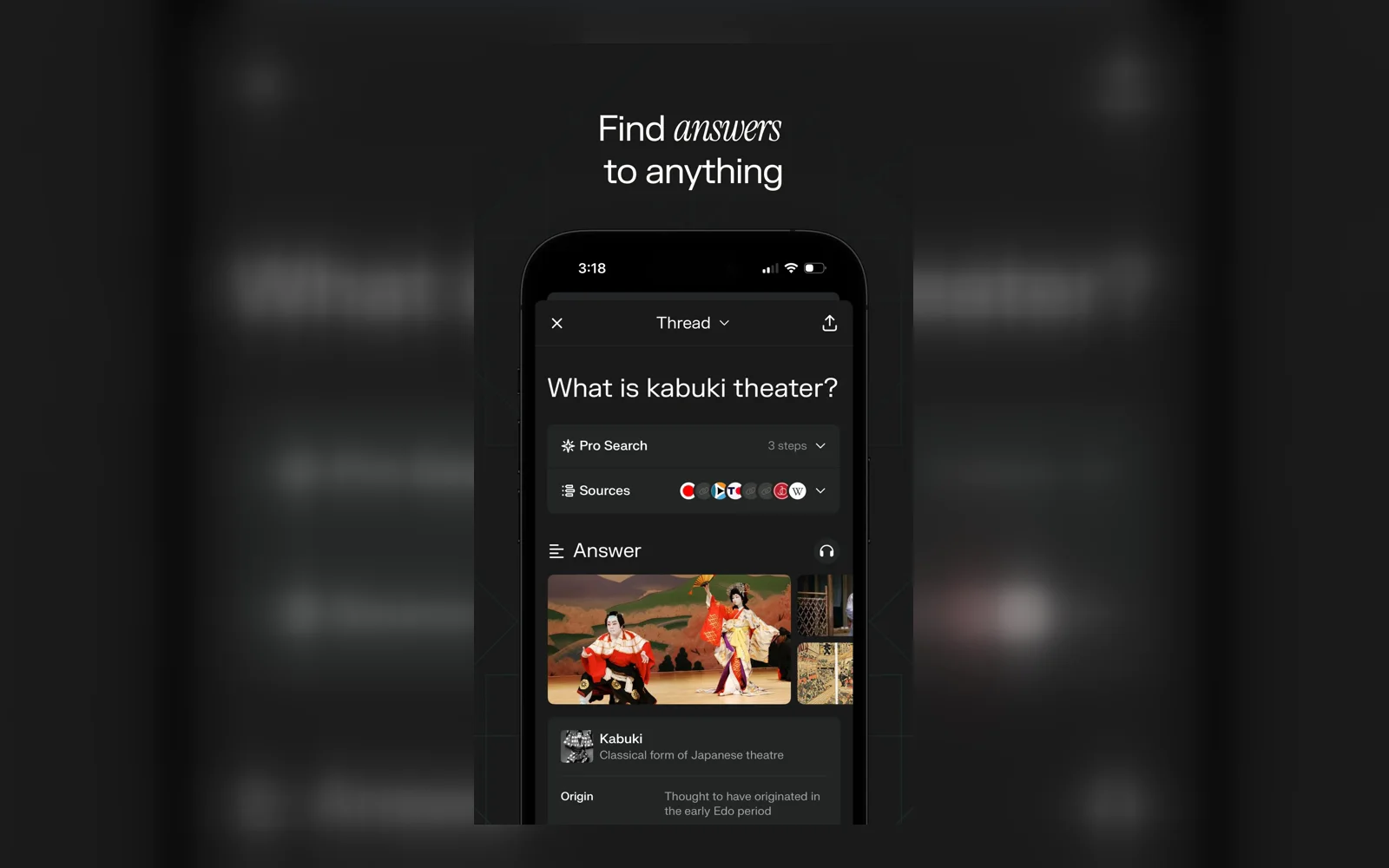
This guide is public-source desk research checked October 24, 2026. We did not run authenticated product trials, test source recall, or measure brief accuracy, research time, or business outcomes. Vendor screenshots are labeled examples, and community reports support workflow requirements only.
For related research decisions, see AlphaSense vs Tegus buying guide.
Sources & further reading
- AlphaSense Generative Search workflow and citations
- AlphaSense content sets and entitlements
- AlphaSense pricing and enterprise controls
- AlphaSense generative AI security
- Perplexity Pro Search scope and citation behavior
- Perplexity plan limits and privacy scope
- Perplexity public pricing
- Gemini Notebook plans and source limits
- Gemini Notebook compute-based usage limits
- Google One US bundle pricing
- Gemini Notebook privacy and feedback handling
- Practitioner competitor-research workflow using Perplexity
- Marketer discussion of manual competitor research and verification


Ordered for comparison, not as a universal ranking. Inclusion requires a direct fit with this page's stated workflow.