Tool
Perplexity
A search-first AI assistant that answers with web citations, supports file analysis, and routes work across multiple models.
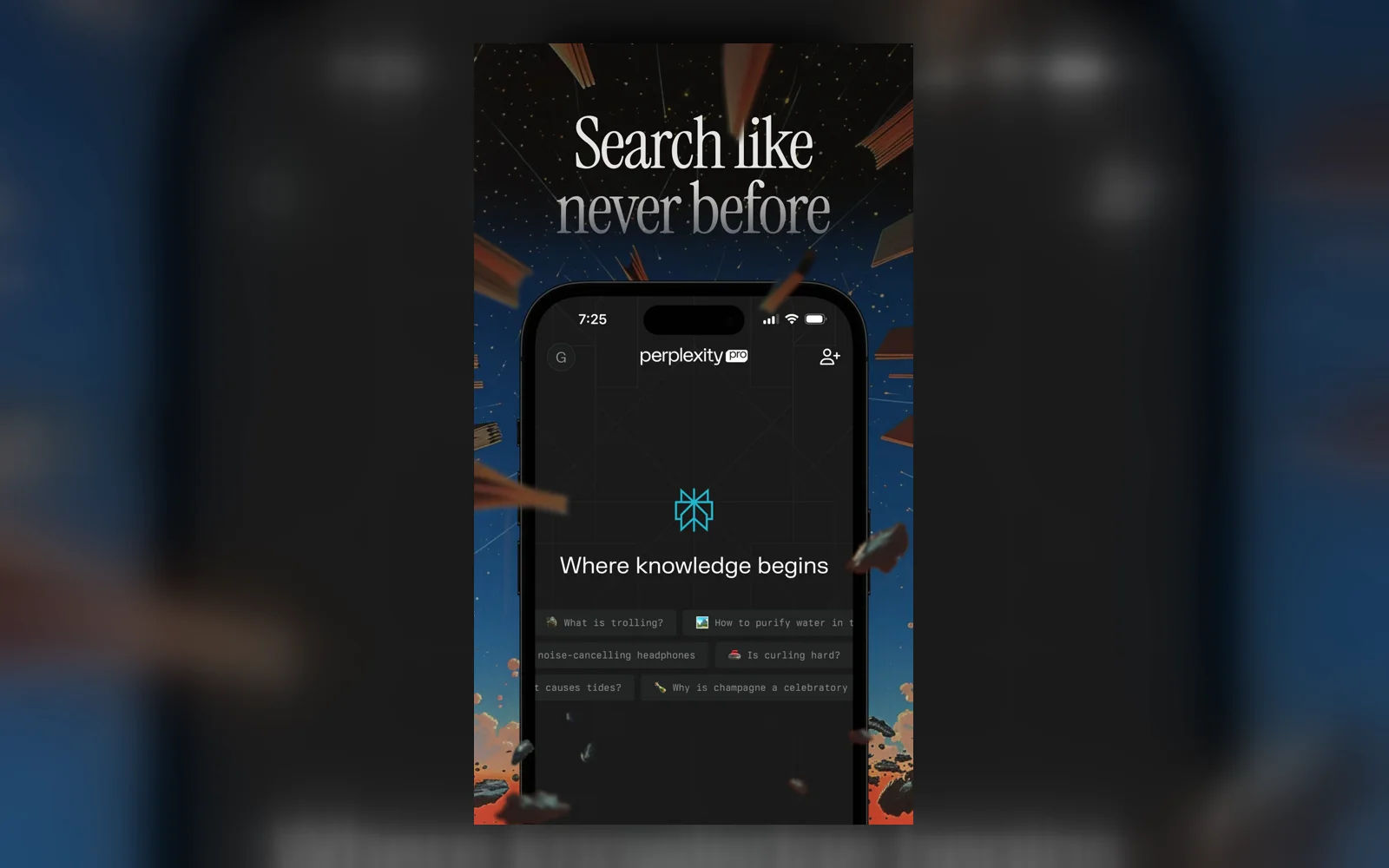
TL;DR
- Best for current research with visible source links.
- Combines live web search with a conversational answer interface.
- Pro adds higher limits, advanced models, file analysis, Projects, and image generation.
- Core search is free; Pro costs $20 per month or $200 per year.
- A citation is a lead, not proof that every sentence is supported.
Perplexity is a search-first AI assistant. It researches the live web, writes a direct answer, and places source links beside its claims. Unlike an assistant tied to one model, Perplexity can route work across several frontier models while keeping search and citations as the main interface.
Decision snapshot
| Question | Answer |
|---|---|
| Primary interface | Conversational web search with inline citations |
| Best use | Current research, source discovery, comparisons, and quick factual orientation |
| Can it analyze files? | Yes, with plan-dependent limits |
| Starting paid price | $20 per month for Perplexity Pro |
| Main trade-off | Citations still require claim-by-claim verification |
What Perplexity does well
Perplexity shortens the first pass of research. It can search current sources, synthesize the result, and leave a visible trail back to the pages it used. That makes it useful when a normal chatbot's uncited answer would create more verification work than it saves.
Its paid product extends that research loop with Pro Search, Projects, file uploads and analysis, image generation, and access to advanced models. The web app, mobile apps, and Comet browser make the same search-led workflow available in several contexts.
Where it falls short
Visible citations do not guarantee that a linked page supports the exact sentence beside it. Sources can be weak, stale, or only loosely related. Open the important links before relying on an answer for medical, legal, financial, or publication work.
Perplexity is also less natural than a writing-first assistant for extended drafting or careful voice work. Its strength is finding and organizing information. The final argument or polished prose may be better handled elsewhere after the evidence is collected.
What users report
In a Reddit discussion, u/EverydayPhilisophy praised “the ability to search academia or social” and the lack of fluff. Replies in the same thread warned that references still need checking. That mix captures the product well: fast source discovery with a verification step that cannot be skipped.
Bottom line
Choose Perplexity when the first question is “what do current sources say?” Choose a writing-first assistant when the main job is sustained reasoning, rewriting, or preserving a particular voice.