
Tool
HeyGen
AI avatar and video localization platform for talking-head content, digital twins, translation, and reusable presenter workflows.
TL;DR
- Best for reusable talking-head formats, digital twins, and multilingual presenter videos.
- Free plan allows three videos per month up to one minute; Creator starts at $29 monthly.
- Script changes are much cheaper operationally than reshooting a person.
- Credit rules, premium avatar models, and render revisions need a real pilot before automation.
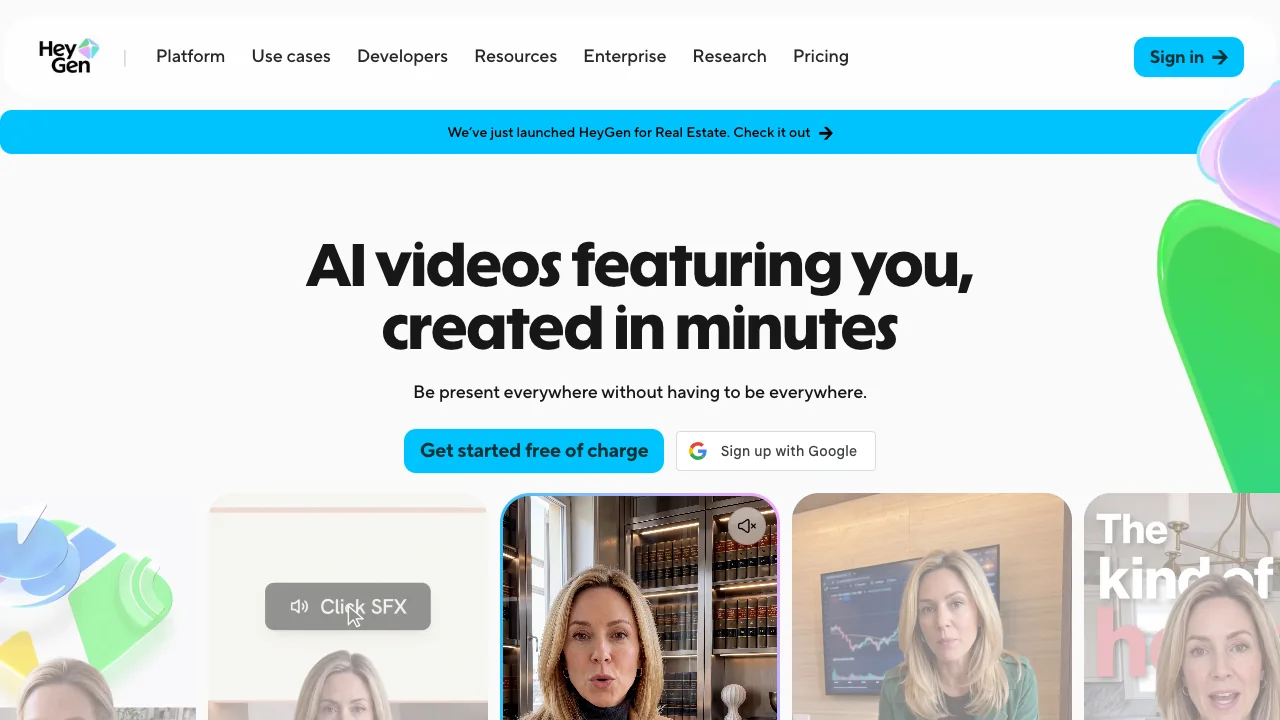
HeyGen is an avatar-first video studio. A team can choose a stock presenter, create a digital twin, clone or select a voice, write a script, and produce repeatable talking-head videos without returning to a camera for every revision. Translation and lip-sync extend that workflow to multilingual versions.
Decision snapshot
| Question | Answer |
|---|---|
| Best use | Recurring explainers, personalized intros, spokesperson videos, and localization |
| Strongest advantage | Fast script-to-presenter iteration with reusable avatars |
| Better than a full editor at | Producing consistent talking-head formats at volume |
| Main constraint | High-quality modes use credits, and avatar emotion remains narrower than human performance |
What HeyGen does well
Reusable avatars change the economics of a recurring format. Once the look and voice are approved, a producer can update copy and regenerate without coordinating another shoot. Translation is especially valuable when the original composition should remain consistent across markets.
A Reddit user who generated more than 30 videos called it “the closest thing I’ve found to a reusable AI video studio.” They praised consistent recurring avatars and fast script iteration, but also noted limited emotional range and flatter stock voices. That is a credible use case and a credible boundary.
Where it falls short
The pricing headline does not explain every model-specific allowance. Newer avatar modes, faster rendering, long runtimes, or repeated revisions can draw down credits differently. Several professional users also report that preview and final render can diverge. Build an approval step after rendering; never auto-publish a generated spokesperson.
Avatar content also creates disclosure and trust questions. Identify synthetic presenters when the audience could reasonably mistake them for a real recording, secure consent for cloned identities, and retain source scripts for review.
Bottom line
Choose HeyGen when the product is a repeatable presenter workflow. Choose Synthesia when enterprise training governance dominates, and use filmed talent when authority, warmth, or spontaneous delivery matters more than production speed.
Sources & further reading


Appears in