Comparison
Claude Code vs Codex (2026)
Choose Claude Code for interactive repository work and policy controls; choose Codex for worktree handoffs, review scopes, and local provider choice.
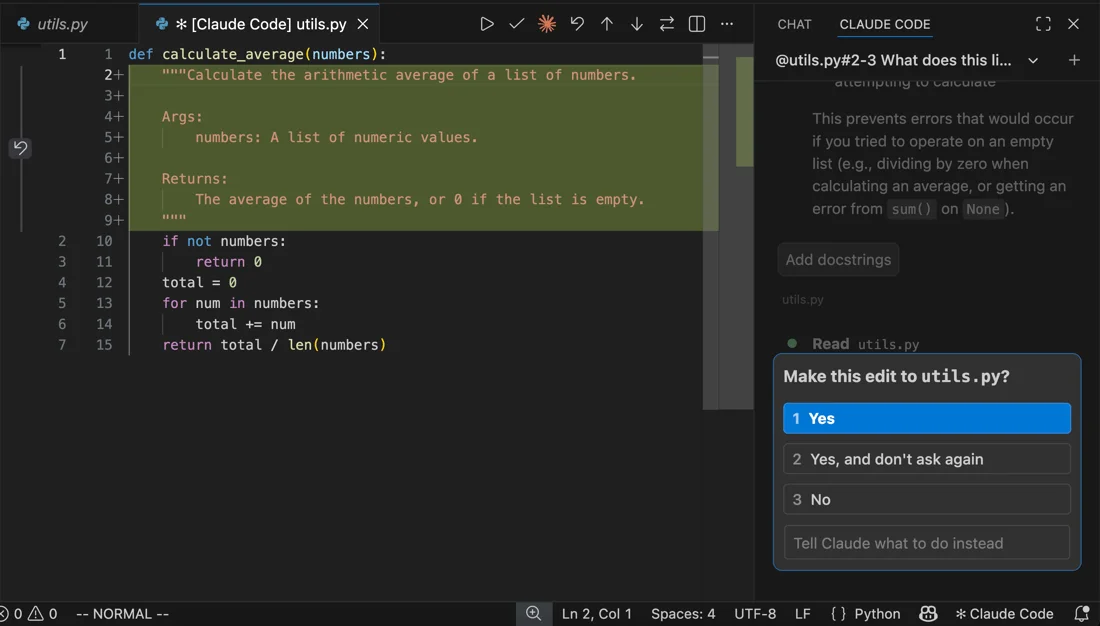
Choose Claude Code when you want to shape an interactive agent around explicit permission rules, shell workflows, and Anthropic's Claude models across several enterprise clouds. Choose Codex when parallel local worktrees, handoff between background and foreground work, dedicated review views, or local and custom model providers matter more. Both can edit a repository, run commands, work locally or in the cloud, and return a diff. The verdict weighs execution controls and review workflow. It does not assert that one model writes better code.
Claude Code vs Codex decision matrix
| Decision | Claude Code | Codex |
|---|---|---|
| Execution model | Interactive terminal, IDE, desktop, cloud, or SSH sessions; desktop supports parallel sessions with Git isolation | CLI, IDE, desktop, and isolated cloud tasks; desktop worktrees can run in parallel and hand off to a local checkout |
| Permissions | Manual, accept-edits, plan, auto, don't-ask, and bypass modes plus repository-scoped allow, ask, and deny rules | Default workspace-write sandbox with on-request escalation; read-only, full-access, granular policies, rules, and optional auto-review of approvals |
| Isolation | Built-in Bash sandbox can enforce filesystem and network boundaries independently | Local sandbox limits filesystem writes and network access; cloud tasks run in isolated environments and block agent-phase internet access by default |
| Review | Desktop diff comments, code review, PR status, and CI failure follow-up | Review pane for unstaged, staged, commit, branch, or last-turn diffs; /review uses a dedicated reviewer without changing the working tree |
| Environment | Local machine, Anthropic cloud, SSH host, WSL, or enterprise deployment through Anthropic, AWS, Google Cloud, and Microsoft | Local checkout, managed worktree, OpenAI cloud, or API/SDK environment; worktree handoff is a first-class desktop flow |
| Individual pricing | Pro is $20 monthly or $17 monthly billed annually; Max starts at $100 for 5x or 20x Pro usage | Limited free desktop access, subject to rollout; Plus is $20 monthly; Pro starts at $100 for 5x or 20x Plus limits |
| Quota and credits | Claude and Claude Code share subscription limits. Optional usage credits continue at API rates after included usage | Codex and ChatGPT Work share usage; other agentic products can share the pool. Extra credits are separate from API credits |
| Model portability | Claude models through Anthropic plus supported AWS, Google Cloud, Microsoft, and gateway deployments | Local clients support custom Responses-compatible providers, Amazon Bedrock, Ollama, and LM Studio; hosted features have narrower provider support |
| Data controls | Consumer model-improvement setting applies to Claude Code; commercial terms do not train on code or prompts by default | Individual Codex content may be used when model improvement is enabled; Business, Enterprise, Edu, and API data are not used for training by default |
Pick Claude Code for a permission-heavy interactive loop
Claude Code exposes a detailed policy layer. In Manual mode, reads inside the working directory do not prompt, while shell commands, file changes, web fetches, and web search follow documented approval rules. Teams can check shared allow, ask, and deny policies into a repository, while developers keep local exceptions. Its sandbox treats filesystem and network isolation as separate controls, so a team can allow package hosts without opening the rest of the machine.
That control is useful when the agent stays close to a developer for a long debugging or refactoring session. Claude Code Desktop now adds parallel Git-isolated sessions, visual diff comments, local and cloud execution, and SSH connections, so it is no longer only a terminal product. Choose it when the primary workflow is still conversational steering and the team wants a rich, explicit policy vocabulary around that loop.
Claude Code also offers deployment portability across Anthropic's API and supported AWS, Google Cloud, and Microsoft routes. That is infrastructure portability rather than broad model portability: the supported model family remains Claude.
Pick Codex for parallel worktrees and review transitions
OpenAI Codex makes isolated work a core desktop primitive. A task can start from a selected branch in a managed worktree, continue in the background, and then hand off to the local checkout for normal IDE work. Cloud tasks get isolated environments and can run concurrently; internet access during the agent phase is blocked by default and can be enabled per environment.
The review surface is unusually specific. Codex can display unstaged, staged, commit, branch, and last-turn changes, while /review launches a dedicated reviewer that reports findings without modifying the tree. That makes Codex a strong fit when the unit of work is “delegate a bounded change, inspect its evidence, then decide whether to continue locally.”
Codex also has the broader supported provider escape hatch in local clients. Its configuration documents custom Responses-compatible providers, Amazon Bedrock, and local Ollama or LM Studio sessions. Do not assume every hosted feature follows: API-key use excludes cloud integrations such as hosted GitHub review, and custom-provider feature coverage depends on the provider.
Pricing and quotas need a workload test
Prices and limits were checked on September 29, 2026. Both paid entry plans cost $20 monthly, and both offer higher-capacity individual tiers from $100. The meters are not directly comparable.
Claude Pro and Max share limits across Claude and Claude Code. After the included allowance, a user can wait for reset, enable usage credits, or switch to separately billed API usage. Codex Plus and Pro share allowance with ChatGPT Work, and eligible account features can draw from the same agentic credit pool. OpenAI says cloud tasks may consume more allowance than local messages; both vendors say task size, context, model, and tool use change consumption.
Do not turn a forum report about “more prompts” into a quota promise. Run the same week of representative work on each entry plan and record completed tasks, review time, and overage cost.
Data policy depends on account type
For individual accounts, both vendors expose a model-improvement control. Anthropic says consumer Claude Code data can train future models when that setting is on; OpenAI says individual Codex content may be used when its improvement setting is enabled and provides a separate control for sharing full environments. For commercial use, Anthropic's Team, Enterprise, and API terms and OpenAI's Business, Enterprise, Edu, and API terms do not use customer inputs or outputs for training by default.
Treat account type, retention, environment sharing, and feedback submission as procurement fields. A local sandbox limits what commands can touch; it does not by itself determine how prompts, code, or transcripts are retained by the service.
What experienced users report
Community reports are useful workflow anecdotes, not controlled product tests. Reddit user u/jdcarnivore said they use Claude Code for planning and self-correction across many files, while preferring Codex for tighter, single-shot edits. On Hacker News, w4v3z framed the split as Codex for autonomy and speed versus Claude Code for closer interactive control. Both reports depend on personal repositories, configuration, plan, and model versions.
Those accounts support a trial design, not a winner. Give each product the same bug, multi-file feature, and review task. Keep the starting commit, repository instructions, permissions, and acceptance checks constant. Measure accepted changes and human correction time rather than output volume or a public benchmark score.
The practical decision
- Pick Claude Code when fine-grained permission rules, SSH or enterprise-cloud deployment, and an interactive terminal-first workflow are decisive.
- Pick Codex when managed worktrees, local-to-background handoff, dedicated review scopes, and provider flexibility are decisive.
- Trial both when the main question is model quality. That result is specific to your codebase, prompt, model, and date.
See the broader AI coding agents guide, then use the issue-to-PR workflow or AI-assisted pull request review guide to evaluate either product on a repeatable job.
Sources & further reading
- Claude pricing
- Claude Code permissions
- Claude Code sandboxing
- Claude Code desktop
- Claude Code enterprise deployment
- Claude Code data usage
- Claude Code subscription usage
- Codex pricing and usage limits
- Codex approvals and security
- Codex worktrees
- Codex code review
- Codex cloud
- Codex advanced configuration
- OpenAI model-improvement data controls
- Reddit workflow comparison
- Hacker News workflow comparison


Ordered for comparison, not as a universal ranking. Inclusion requires a direct fit with this page's stated workflow.