
Tool
Salesloft
Revenue workflow platform for cadences, prioritized seller tasks, conversations, coaching, deal management, and forecasting.
TL;DR
- Best for structured sales cadences plus manager visibility into activity, conversations, and pipeline.
- Rhythm prioritizes seller work using buyer and account signals.
- Supports engagement, conversation intelligence, coaching, deal workflows, and forecasting.
- Pricing is custom, and implementation quality strongly affects rep adoption.
- It is not a replacement for a dedicated, accurate B2B contact-data provider.
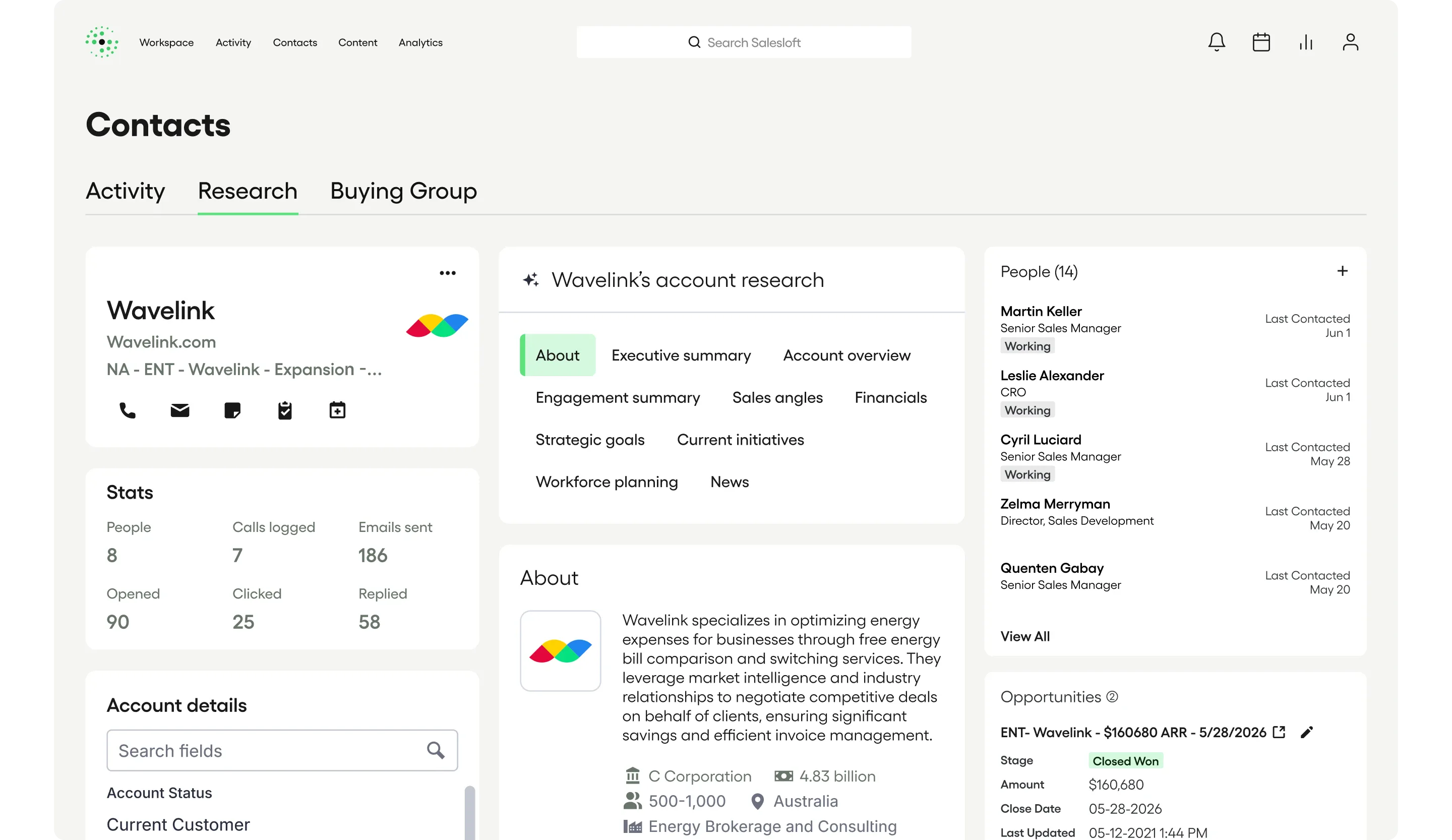
Salesloft is a revenue workflow platform built around seller execution. Cadences organize outreach, while Rhythm turns buyer and account signals into a prioritized task list. Conversation, coaching, deal, and forecast capabilities give managers a broader view of how activity connects to pipeline.
Decision snapshot
| Question | Answer |
|---|---|
| Primary interface | Web and mobile workflow connected to CRM, email, calendar, and calling systems |
| Best use | Running repeatable engagement cadences with centralized reporting and coaching |
| AI role | Signal prioritization, next actions, content assistance, conversation insights, and forecast support |
| Starting paid price | Custom quote |
| Main trade-off | Rep usability depends on how well operations configures workflows and data |
What Salesloft does well
Salesloft gives reps one queue for email, call, social, and follow-up tasks instead of making them assemble a workday from CRM views. Rhythm is designed to rank those actions based on signals rather than a static task list. For managers, activity data, conversation intelligence, coaching, and forecast views create a clearer operating cadence.
The platform is most valuable when the team agrees on sales stages, routing, cadence standards, and required CRM fields. In that environment, it can reduce manual logging while making execution visible enough to coach and improve.
Where it falls short
Salesloft is not a prospect database in the Apollo sense. Teams that need broad, verified contact coverage will often add a data provider, increasing cost and integration work. Public self-serve pricing is not available, so buyers need to compare the complete quote, implementation services, and adjacent data spend.
Configuration can also favor management dashboards over a rep's daily workflow. Rigid cadences, cluttered task queues, or a non-standard sales cycle may create workarounds. Include sellers in design and test actual high-volume days before organization-wide rollout.
What users report
A 2026 r/SalesOperations user described the adoption tension directly:
“The reps who grind 200+ activities a day think the UI is clunky and the cadence builder takes forever. Meanwhile our VP swears by the analytics dashboards and forecasting features.”
A later commenter in the same thread said rep experience improved after sales managers and sellers helped redesign a configuration originally built only by operations. That makes implementation governance a buying criterion, not a post-purchase detail.
Bottom line
Choose Salesloft when cadences, prioritized seller work, coaching, and management visibility need to live in one governed workflow. Choose a simpler engagement tool when the team has a lightweight motion or cannot dedicate ownership to implementation and ongoing administration.
Sources & further reading



Appears in