
Tool
Nooks
Nooks review for outbound teams: parallel and adaptive dialing, sequencing, coaching, custom pricing, AI credits, and 2026 data terms.
Verdict
Choose Nooks when a call-heavy outbound team already has workable lists and loses material rep time to ringing, voicemail, and post-call admin. Its strongest case is one workspace for power or parallel dialing, sequencing, live coaching, signal-based prioritization, and enrichment. Do not buy it on dial volume alone. Run a controlled pilot that measures useful conversations and meetings beside cancelled pickups, bridge delay, spam-label health, bad-number recirculation, and rep time. Pricing is quote-only, so a complete order form matters as much as the demo.
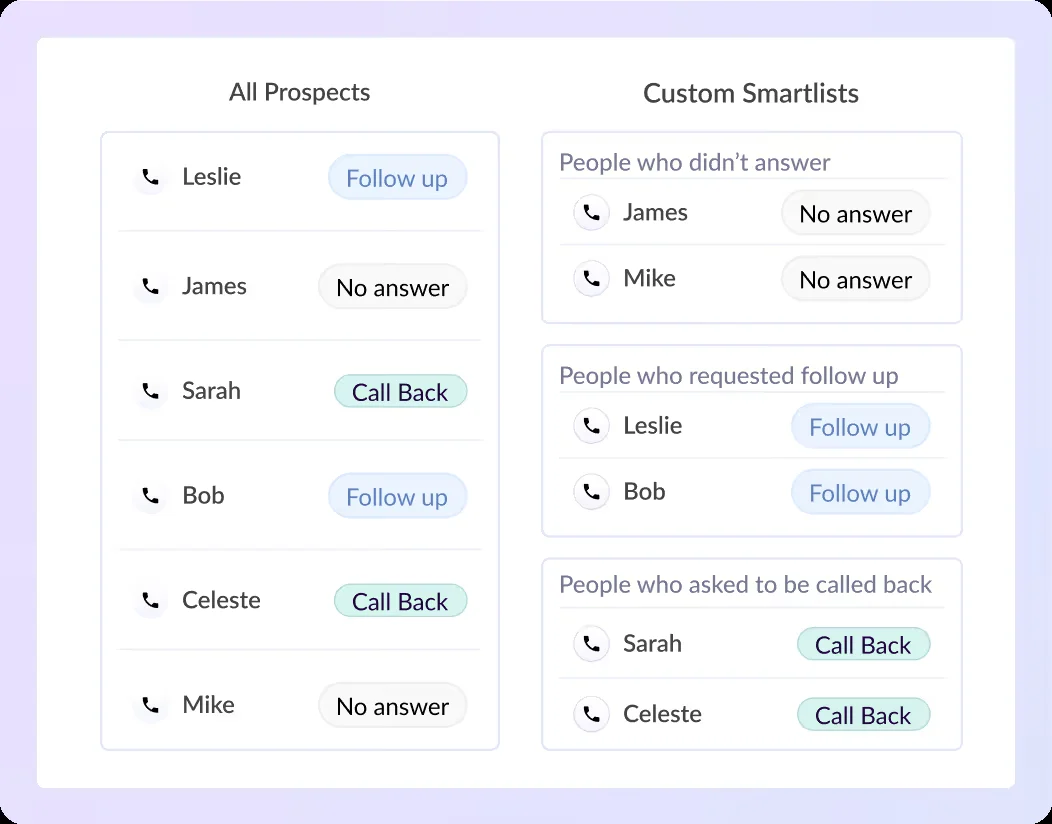
Nooks is a sales-engagement platform built around an AI Dialer, with AI Sequencing, Signals and Intelligence, AI Coaching, and contact-data enrichment alongside it. The dialer handles one-line power dialing and multi-line parallel dialing, answer detection, voicemail drops, call logging, number rotation, live battlecards, the shared Virtual Salesfloor, and analytics. Sequencing adds call, email, SMS, and social steps. Nooks advertises it as a replacement for Outreach or Salesloft, while its pricing FAQ says most customers retain a primary contact-data provider.
Start with the AI sales tools guide to locate the missing layer, then use the AI sales prospecting shortlist for a wider comparison. Consider Apollo when database access and public self-serve pricing matter most. Compare Salesloft when governed cadences across a broader revenue workflow matter more than a specialized parallel dialer.
Nooks buying criteria
| Decision | Nooks fits when | Prove in the pilot |
|---|---|---|
| Call economics | Reps spend substantial time waiting through rings, voicemail, and unusable numbers | Compare conversations, meetings, cancellations, wrong numbers, and rep hours per outcome on the same list |
| Dialing mode | The motion has both high-volume cold lists and targeted accounts | Split power, two-line adaptive, fixed parallel, and Turbo by segment; track abandoned or cancelled pickups |
| Data quality | List ownership is sound and enrichment gaps are measurable | Audit mobile coverage, validity, duplicates, DNC suppression, job changes, writeback, and credits consumed |
| Rep workflow | Calls, email, SMS, social tasks, scripts, and follow-up need one queue | Test real rep days, CRM sync, dispositions, sequence exits, callback handling, and supervisor intervention |
| Coaching | Managers will use live listening, whisper coaching, recordings, scoring, or role-play | Define recording consent, access, review cadence, scoring rubric, and the behavior expected to change |
| Governance | Legal can approve outbound channels, recordings, enrichment, AI processing, and shared signals | Review order form, DPA, retention, subprocessors, model terms, suppression, export, and role permissions |
Pricing, credits, and contractual limits
The pricing page, checked October 11, 2026, publishes no price, free plan, trial duration, seat minimum, or standard bundle. Buyers must request a custom quote. The current terms place fees and service capacity in the order form; capacity overages can create additional charges. The initial term also comes from the order form and renews for the same duration unless either party requests termination at least 30 days before the term ends.
Published limits are fragmented:
- Power dialing is one line. Fixed parallel dialing supports two to five lines.
- Adaptive starts from a selected two-to-five-line base and changes active lines using pickup predictions. Turbo uses the same model with higher risk tolerance and averages about six lines. Both require a Parallel Dialing seat, a standard Nooks number, and workspace data sharing.
- The SCIM guide gives a Pro plan example of 2,750 AI credits per week for Sequencing. It does not publish the Basic allowance, per-action cost, rollover, overage rate, or price.
- Nooks Numbers is an add-on. Its sequence view loads up to 1,000 active prospects. Enrichment credits are charged only when a new mobile number is found; provider costs vary, and connected providers may consume their own credits.
Ask the quote to separate Dialer, Parallel Dialer, Sequencing, Coaching, International, Nooks Numbers, data packages, phone inventory, implementation, and support. Define credit resets, provider charges, service capacity, overages, renewal uplift, number portability, and export. Nooks-provisioned numbers cannot be ported or retained after termination under the current terms. The terms' public service level is 98% monthly availability with broad exclusions, so negotiate requirements that matter to calling hours. Anecdotal prices are too contract-specific to use as a benchmark.
The throughput trade-off
Parallel dialing calls several prospects at once and connects the rep to a detected live answer. Nooks documents the unavoidable trade-off: when one line connects, the others are cancelled and remain in the list. More simultaneous lines increase cancellation risk. Adaptive and Turbo use cross-workspace pickup predictions to manage that risk; they do not eliminate it.
Power dialing suits warm or narrow account lists where every pickup deserves preparation. Parallel or Turbo is easier to justify on large cold lists with low pickup rates. If reps repeatedly call incorrect contacts, exhaust small territories, or lack a credible reason to speak, faster dialing scales the defect.
Use automated sales prospecting to design the list-to-task flow, lead scoring and prioritization for review gates, and sales-call analysis for coaching criteria.
Nooks also exposes a Claude MCP connector for users with Sequencing or Coaching seats. It can read and write sequences, enrollments, tasks, notes, prospects, and email within granted scopes, and can access eligible calls and transcripts. It cannot place calls, cannot see external-platform sequences or tasks, and only sees the connected workspace and the user's permitted records. Test destructive scopes and CRM field ownership before letting an AI client alter production sequences.
Privacy and operational boundaries
Nooks' August 25, 2026 privacy policy separates several uses. Nooks acts as a processor for customer sales workflows and recordings, but as a controller for proprietary-model training and aggregated cross-workspace Platform Intelligence. Platform Intelligence can pair phone numbers with connection, pickup, and quality signals; the policy says it excludes recordings, prospect names, and workspace linkage. Opting out removes pickup-likelihood and quality-ranking features, and Adaptive and Turbo require data sharing.
Recorded customer calls may be used to provide or improve the service and train proprietary models. Users can request an opt-out by email, with possible feature loss. Separately, Nooks says third-party generative models process customer data for inference and are contractually prohibited from training on it. Keep those two commitments distinct during review.
The October 6 terms make the customer responsible for outreach law, recipient permissions, and recording consent. The DPA allows a data export requested within 30 days after termination, then deletion follows Nooks' retention practices; backup timelines are not quantified and aggregated data is excluded. The trust center lists SOC 2 Type II and ISO/IEC 27001:2022. Request the reports, subprocessor list, retention schedule, regional details, and customer-specific AI terms rather than treating badges as approval.
What users report
Two Reddit threads provide anecdotal pilot questions, not performance evidence. On April 29, 2025, beersovertears, identifying as an SDR using Nooks, described parallel dialing as useful for large daily lists and liked timezone filtering. In an April 30 follow-up, the same user reported wrong-number records returning to the dialer and occasional failed auto-connects, while saying support fixed the latter quickly.
On January 11, 2025, Ruzro said parallel dialing helped produce connected calls but sometimes created a roughly six-to-seven-second connection delay. In a follow-up, the user said they mainly used two concurrent lines and power dialing. The product has changed since both threads; measure those failure modes on the target network and geography rather than assuming they persist or disappeared.
We did not use a Nooks account, place calls, test CRM sync, verify enrichment accuracy, or reproduce these reports. Vendor case-study outcomes are excluded from the verdict.
Choose Nooks when call throughput is a measured bottleneck, the list can support multi-line dialing, and managers will own data quality, coaching, and compliance. For a database-led motion, start with Apollo. For cadence administration across a broader revenue stack, evaluate Salesloft beside Nooks using the same cohort and outcome definitions.
Sources & further reading
- Nooks pricing and product packaging
- Nooks AI Dialer product page
- Adaptive and Turbo Dialing guide
- Parallel Dialing guide
- Nooks SCIM and Sequencing plan guide
- Nooks Numbers guide
- Nooks Claude connector guide
- Nooks terms and service levels
- Nooks privacy policy
- Nooks data processing addendum
- Nooks trust center
- SDR report on Nooks workflow and bugs
- Sales users discuss Nooks parallel dialing