Comparison
Outreach vs Salesloft (2026)
Choose Outreach for governed sequence and AI-agent execution; choose Salesloft for Rhythm-led prioritization and a Clari-connected forecast workflow.
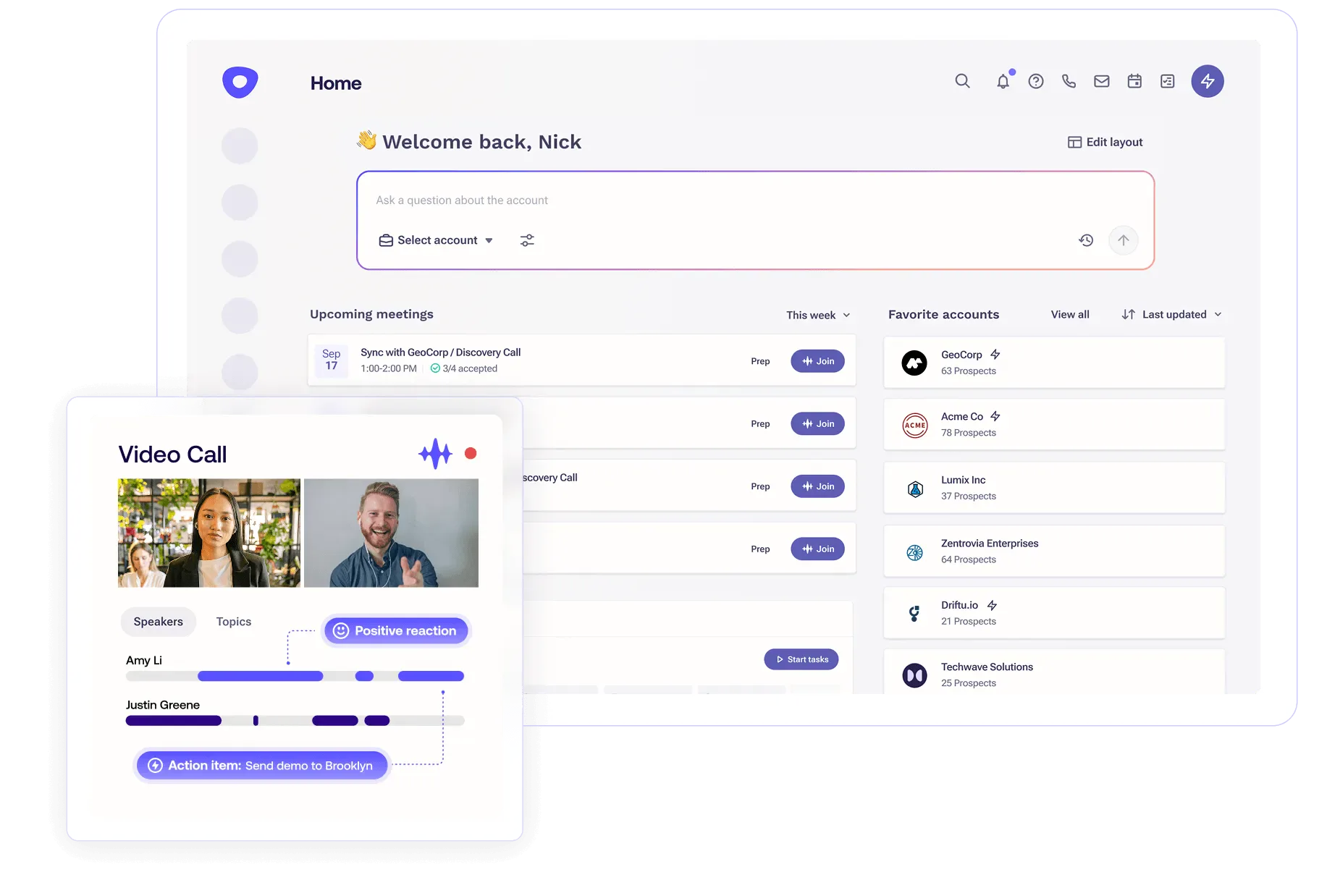
Verdict: Choose Outreach when RevOps needs detailed sequence governance, programmable automation, and a broad set of AI agents with published usage allowances. Choose Salesloft when the buying decision centers on Rhythm's signal-ranked seller workflow and connecting engagement to Clari Forecast. For a small team that mainly needs email sequences, choose neither by default: both are enterprise systems with quote-only pricing and implementation overhead.
Outreach is the stronger execution choice in this pair. Salesloft is the more interesting workflow-and-forecast choice. Their feature lists overlap heavily, so the deciding test should use your CRM objects, task volume, permission model, and migration content rather than a scripted vendor demo.
We did not run a controlled product, deliverability, or revenue-impact test. This comparison uses first-party product and support documentation checked on October 7, 2026, plus attributed practitioner reports. Vendor performance claims do not determine the verdict.
Outreach vs Salesloft decision matrix
| Decision | Outreach | Salesloft |
|---|---|---|
| Core operating model | Sequences, tasks, calls, meetings, deals, and configurable agent workflows | Rhythm prioritizes seller actions from signals; Cadence, Conversations, Deals, Coaching, and forecasting surround that queue |
| Best fit | Mature outbound or full-cycle team with dedicated RevOps administration | Revenue team that values one ranked daily workflow and tighter engagement-to-forecast context |
| AI scope | Named research, personalization, meeting-prep, deal, revenue, coaching, and Omni agents vary by Amplify tier | Ask Salesloft is shared; Account Agent and Coaching Agent are add-ons; forecast AI is a separate add-on |
| Governance | Role hierarchy plus profiles and resource-level permissions; agent creation and run access can be separated | Custom roles, groups, permissions, cadence limits, account controls, SSO, and regional governance |
| Pricing visibility | Custom quote, but publishes 10,000–100,000 included AI credits plus API, custom-object, and knowledge limits by tier | Custom quote; public docs name Advanced and Elite; Account Agent includes 100 research runs per licensed user/month, pooled across those users |
| Forecasting | Amplify Pro includes forecasting, territory management, multiple currencies, and parallel forecasts | Clari Forecast retains its name; Forecasting remains an add-on while product integration continues |
| Rollout risk | More configuration and credit monitoring; no hard per-user AI credit cap | Rep adoption depends on Rhythm and cadence design; Clari/Salesloft integration is still evolving |
Pick Outreach for controlled execution and agent rollout
Outreach's current Amplify packaging makes its operational shape unusually visible for quote-only enterprise software. Core adds multichannel sequences, engagement reporting, the Research, Revenue, and Personalization agents, and 25,000 AI credits. Plus raises the allowance to 50,000 and adds live coaching, meeting intelligence, more agent capability, and higher platform limits. Pro reaches 100,000 credits and adds forecasting and managed services. Essentials is the conversation-intelligence starting point with 10,000 credits; it does not include multichannel sequences.
Credits pay for discrete AI actions such as research or personalized-message generation. They are managed at account level. Outreach documents usage by user and action in the metering dashboard, but admins cannot enforce a hard credit ceiling per person. A pilot therefore needs permission controls, named workflows, and a weekly consumption review—not just a total credit estimate.
Outreach also has a clear governance model: roles determine record hierarchy, profiles hold permissions, and permissions apply to resources such as prospects, sequences, opportunities, and agents. That depth is valuable when separate SDR, AE, manager, and operations groups need different rights. It is extra system design for a ten-person team with one motion.
Pick Salesloft for prioritized seller work and forecast context
Salesloft's clearest distinction is Rhythm. It combines buyer and account signals into Focus Zones and reorders the seller's work as deal information changes. Plays turn qualifying signals into prescribed actions. That is a better buying anchor than “cadences versus sequences,” where the products are close.
Current standard packaging is Advanced and Elite. Both include Rhythm, Conversations, Deals, Cadence, Coaching, sales email, Ask Salesloft, automation, calendaring, CRM sync, analytics, and mobile access. Elite targets more complex organizations with multi-team administration, sandbox, and CRM signals for custom objects. Forecasting, Account Agent, Coaching Agent, and Dialer are separately documented add-ons. Salesloft also notes that Deals is available only to Salesforce customers, and mobile calling requires the Dialer add-on.
Clari and Salesloft now operate under the Salesloft brand, with Clari Forecast retaining its name. That expands the strategic scope of a Salesloft evaluation, but the vendor says product integration is ongoing and current workflows will not change immediately. Treat the combined vision as roadmap context. Make the contract and pilot prove which forecast, conversation, and engagement surfaces are connected today.
Pricing, security, and rollout questions
Neither vendor publishes a dollar price. Ask both for a three-year quote that separates user licenses, dialer and telephony, conversation recording, forecasting, AI or agent consumption, sandbox, implementation, support, and overage rates. For Outreach, map representative actions to its four published credit allowances and confirm the contract's reset and overage rules. For Salesloft, confirm Advanced-versus-Elite entitlements. Its product-specific terms include 100 Research Agent runs per licensed Account Agent user/month, pooled across those users. A run counts regardless of result quality or completeness; excess use can incur charges or suspension.
Both vendors publish SOC 2 Type II, ISO 27001, and ISO 27701 credentials. Outreach additionally lists ISO 42001 and HIPAA on its trust page; detailed reports and its AI data-use paper require vendor access. Salesloft publishes role, cadence, regional, and SSO controls. Its security review should also cover the 2025 Drift OAuth incident: Salesforce says Salesloft integrations were re-enabled after remediation, while Drift remained excluded in its May 2026 notice. Ask for the current incident report, token model, subprocessor list, and integration scope rather than treating certification badges as the whole review.
Roll out either product with one segment and one manager. Migrate a representative sequence or cadence, templates, suppression rules, custom fields, ownership logic, and 30 days of normal tasks. Measure task completion time, CRM writeback errors, bounced messages, permission exceptions, support response, and admin hours. Deliverability depends on list quality, authentication, sending policy, and copy; neither platform alone proves inbox placement.
What practitioners report
The community evidence is mixed, which is useful. In March 2026, Reddit user Willing-Bet3597 described manually preserving Salesloft notes, tags, cadences, and templates before a migration to Outreach. Sheikybabybaba recommended using Outreach's technical-account and professional-services teams for cleanup and migration. That supports treating content and data migration as a project, not a checkbox.
In an October 2025 comparison, TrollPro9000—who disclosed having worked at Outreach seven years earlier—said the products looked similar early, but Outreach's automation depth required more technical ownership while Salesloft was quicker to adopt. In a May 2026 team evaluation, Nightcrawler_2000 preferred Salesloft's Rhythm and cadence usability but found both enterprise tools heavy for ten reps. These are individual, unverified experiences across different configurations, not evidence that one UI, price, or support organization is universally better.
For adjacent choices, compare Clay vs Apollo, the best AI sales tools, the AI sales prospecting shortlist, and the workflow for syncing meeting notes to a CRM.
Sources & further reading
- Outreach pricing and Amplify packages
- Outreach Amplify FAQ
- Outreach AI credit controls
- Outreach governance model
- Outreach trust and safety
- Salesloft packages and availability
- Salesloft Rhythm
- Salesloft governance
- Salesloft product-specific terms
- Salesloft and Clari merger status
- Salesloft security and compliance
- Salesforce response to the Drift incident
- Outreach and Salesloft migration discussion
- Practitioner comparison discussion
- Team evaluation discussion


Ordered for comparison, not as a universal ranking. Inclusion requires a direct fit with this page's stated workflow.