
Tool
Elastic AI Search
Evaluate Elastic AI Search for custom enterprise retrieval by deployment model, connector ACL coverage, hybrid relevance, 2026 serverless pricing and privacy.
Verdict
Shortlist Elastic AI Search when a platform or search team wants to build a custom search, retrieval or RAG layer and can own ingestion, schema, relevance, permissions and operations. Elasticsearch combines lexical, vector and hybrid retrieval with filters, APIs and deployment control. It is a toolkit for constructing the experience, not a finished workplace-search rollout.
Choose a packaged product such as Glean when the primary job is giving employees a ready search box across common SaaS tools. Elastic becomes the stronger fit when engineers need query-level control, custom ranking, application search, self-managed deployment or one retrieval layer for several product surfaces. Compare the wider market in the AI workplace search tools shortlist.
The name hides an important product boundary
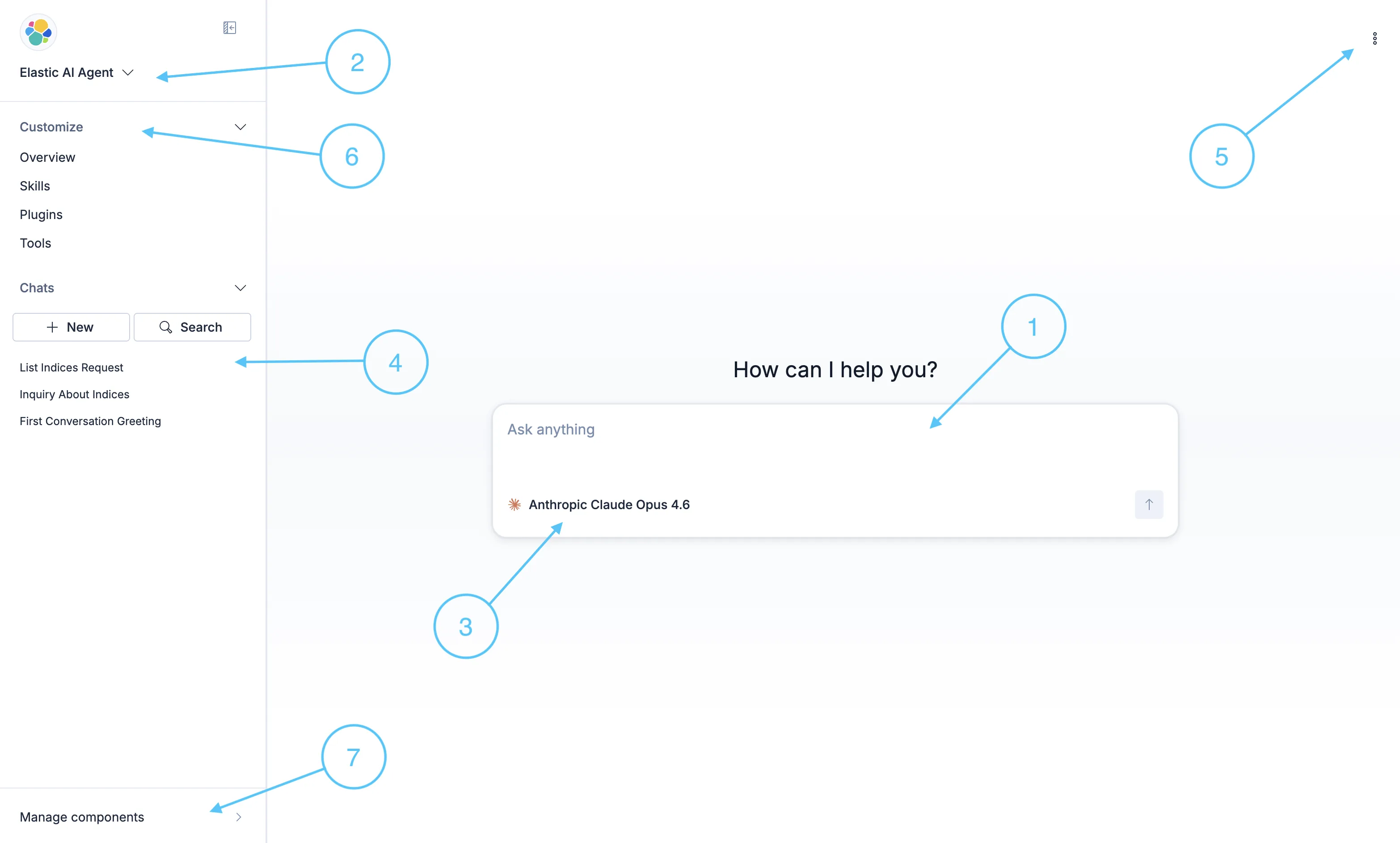
“Elastic AI Search” is a useful description of current Elasticsearch search and AI capabilities, not a separate plan with one feature list. Current buyers choose among general-purpose Elasticsearch, the Serverless-only Elasticsearch Vector Database, Elastic Cloud Hosted and self-managed Elasticsearch. Agent Builder can add a conversational interface over indexed data and tools.
Do not scope a new project from old Enterprise Search, App Search or Workplace Search material. Elastic's current upgrade guide says Enterprise Search is unavailable in Elastic Stack 9.0 and later. App Search, Workplace Search, the managed web crawler and managed content connectors cease to function after that component is removed. The current Hosted-versus-Serverless matrix directs users to self-managed connectors and a self-managed crawler instead.
Decision snapshot
| Decision | What Elastic requires | Buying consequence |
|---|---|---|
| User experience | Your team builds or integrates the search UI, answer flow and feedback loop | More control; more product and engineering work |
| Retrieval | Full-text, semantic, vector, hybrid, reranking and filters | Useful when one method cannot cover exact IDs and natural-language intent |
| Ingestion | APIs, pipelines or source-specific self-managed content connectors | Connector availability does not equal complete ACL or incremental-sync support |
| Permissions | Index privileges plus optional document- and field-level security | ACL design and role testing stay with the implementation team |
| Deployment | Serverless, Hosted or self-managed | Operational control, available APIs, scaling and pricing differ materially |
| Cost | Compute, stored data, inference, egress, support and agent usage can meter separately | A request count alone cannot forecast the bill |
Pick the project type before the relevance stack
Use a general Elasticsearch project for mixed lexical, semantic, analytics or time-series workloads, search-application management, or custom models on ML nodes. Use the Serverless Vector Database when embeddings and similarity search dominate. It applies vector-specific defaults and supports the same core query APIs, but only the vectordb_document index mode; search applications, custom ML nodes, time-series mode and LogsDB mode are unavailable. Each Vector Database project has a non-adjustable 1 TB data limit.
That choice is separate from retrieval design. The current search docs recommend semantic_text as the managed text workflow: it creates mappings, generates embeddings and chunks text. The field itself can be mapped without a paid license, but its usual Inference API path requires an appropriate license; unsupported use can make indexing or reindexing fail. Validate the exact license, model endpoint and deployment route before treating a prototype as portable.
For relevance, start with real queries and judgments. Test exact identifiers, rare terms, synonyms, ambiguous natural language, restricted documents and fresh edits. Score lexical, semantic and hybrid variants on the same set, then add reranking only when it improves top results enough to justify latency and inference cost. Elastic exposes the controls; it does not supply your relevance definition.
Permissions depend on both the source and Elasticsearch
Elastic supports document-level security (DLS) and field-level security (FLS) through roles, including templated document queries based on the authenticated user. The sharp edge is additive roles: if another role grants unrestricted access to the same index, the restricted role does not narrow that grant. DLS and FLS are also documented for read-only privileged accounts. Model the effective union of roles, not the intended role in isolation.
Source ingestion adds another boundary. The current connector matrix marks DLS support per connector: Google Drive, Gmail, SharePoint Online and several others support it, while Notion, Slack, Box and multiple database connectors do not. Some connectors are Preview or Beta. Basic sync rules may filter only after a connector has fetched source data, and a rule change takes effect after the next full sync. Require a source-by-source test for initial access, revocation, group changes, deleted documents and fields excluded before ingest.
Use the company-knowledge search rollout for the acceptance test. If the actual goal is to create owned, canonical policies rather than index distributed material, follow the internal AI knowledge-base guide instead.
Pricing: public Serverless rates are floors, not a complete estimate
Checked October 25, 2026. The public Elasticsearch Serverless page lists as-low-as rates of $0.14 per ingest VCU-hour, $0.09 per search VCU-hour, $0.07 per ML VCU-hour, $0.047 per retained GB-month and $0.05 per GB of egress. Each VCU represents 1 GB of RAM. Search keeps a billable baseline even when queries are idle; ingest can scale to zero.
AI charges are separate. Elastic Managed LLM usage is $4.50 per million input tokens and $21 per million output tokens. Elastic Inference Service starts at $0.08 per million tokens, with model-specific rates. The pricing table lists 1,000 Agent Builder executions free, then rates starting at $0.025 per execution; it does not label a reset period in that row, so confirm the allowance in the order terms. Each completed interaction counts once up to 50,000 input tokens, with additional 50,000-token units counting as more executions. Failed interactions that return no response are not metered as executions.
Those rates apply to the Serverless Elasticsearch pricing page, not every Elastic deployment. Vector Database uses a newer storage, ingest, reserved Search Power and infrastructure-fee model; the current docs direct buyers to the region-specific Cloud Pricing Table. Hosted pricing depends on deployment capacity and subscription level. Self-managed installations can use a non-expiring Basic license, while particular inference and security features require the appropriate license. Ask finance to model enriched stored volume because Elastic says normalized, enriched ingest can be much larger than compressed wire size.
The Cloud trial lasts 14 days and allows one Hosted deployment plus three Serverless projects. It limits scaling and model tokens, caps a Hosted deployment at 4 GB RAM per availability zone across at most two zones, and restricts Serverless Search Power. A successful trial is not capacity evidence for production.
Privacy follows the inference route
Elastic says it does not train Elastic AI on customer data, and third-party providers behind Elastic Managed LLM operate under zero-data-retention agreements. It also says no customer data is stored in Elastic Managed LLM. Embeddings and enriched fields stored in customer indices remain until the customer's lifecycle policy deletes them.
Residency needs a separate check. The deployment region controls where the deployment data is hosted, but Elastic Inference Service routes inference to the nearest available EIS region, which can differ. Large-language-model requests may also be processed by the model provider in another cloud or region. A customer-supplied model connector brings that provider's own terms. Document the model, route, subprocessors, retention, telemetry settings and deletion path actually used in production.
What practitioners report
In an April 2025 r/elasticsearch discussion, xSypRo described the App Search migration as unexpectedly large work. FireNunchuks reported migrating a client and linked a migration write-up. This is anecdotal migration evidence, but it matches the documented 9.x product break.
In a separate r/Rag thread, ksaimohan2k described Elasticsearch search and scaling positively while calling on-premises maintenance a burden. beowulf660 recommended it for hybrid search but noted the need to synchronize application data. These are unattributed-to-employer user reports, not cost or quality benchmarks.
Run a pilot that can reject the platform: one representative source set, a held-out relevance judgment set, effective-role permission tests, deletion and revocation timing, p95 latency under expected concurrency, and a reconciled bill. This profile is source-based research; we did not deploy Elasticsearch, inspect a private corpus or run a retrieval benchmark.
Related decisions
- Glean review: connectors, permissions and pricing
- Coveo review: enterprise relevance platform
- How to Search Company Knowledge With AI
- How to Build an Internal AI Knowledge Base That Stays Current
Sources & further reading
- Current Search and AI product scope
- Elasticsearch and Vector Database project selection
- Enterprise Search removal in Elastic 9
- Hosted and Serverless feature differences
- Elasticsearch Serverless pricing
- Elastic Cloud trial limits
- Vector Database product and 1 TB limit
- Content connector support matrix
- Connector sync rules
- Document and field security
- Semantic text mapping and license requirements
- Vector Database billing dimensions
- Elastic AI privacy and inference routing
- Agent Builder chat interface and controls
- App Search migration discussion by xSypRo and FireNunchuks
- Elasticsearch and PostgreSQL reports by ksaimohan2k and beowulf660


