Tool
People.ai
Revenue intelligence platform, now presented as Backstory, for activity capture, CRM data automation, deal visibility, and revenue answers.
TL;DR
- Best for capturing sales activity automatically and turning it into account, deal, and forecast context.
- People.ai's current product is presented as Backstory, formerly People.ai.
- Connects email, calendar, and Salesforce data to customer profiles and revenue workflows.
- Pricing is custom and implementation depends on CRM structure, permissions, and data hygiene.
- More useful as an organizational data and intelligence layer than as an individual rep's prospecting tool.
People.ai is an enterprise revenue intelligence platform whose current product is branded Backstory. It automatically captures email and meeting activity, maps it to the right CRM records, and uses the resulting account history to answer questions about engagement, deal health, risk, and next actions.
Decision snapshot
| Question | Answer |
|---|---|
| Primary interface | Web and Salesforce-connected revenue intelligence workspace |
| Best use | Creating a reliable interaction history across complex accounts and opportunities |
| AI role | Mapping activity, summarizing account context, identifying risk, and answering revenue questions |
| Starting paid price | Custom quote |
| Main trade-off | Output quality depends on account hierarchy, CRM hygiene, and broad user adoption |
What People.ai does well
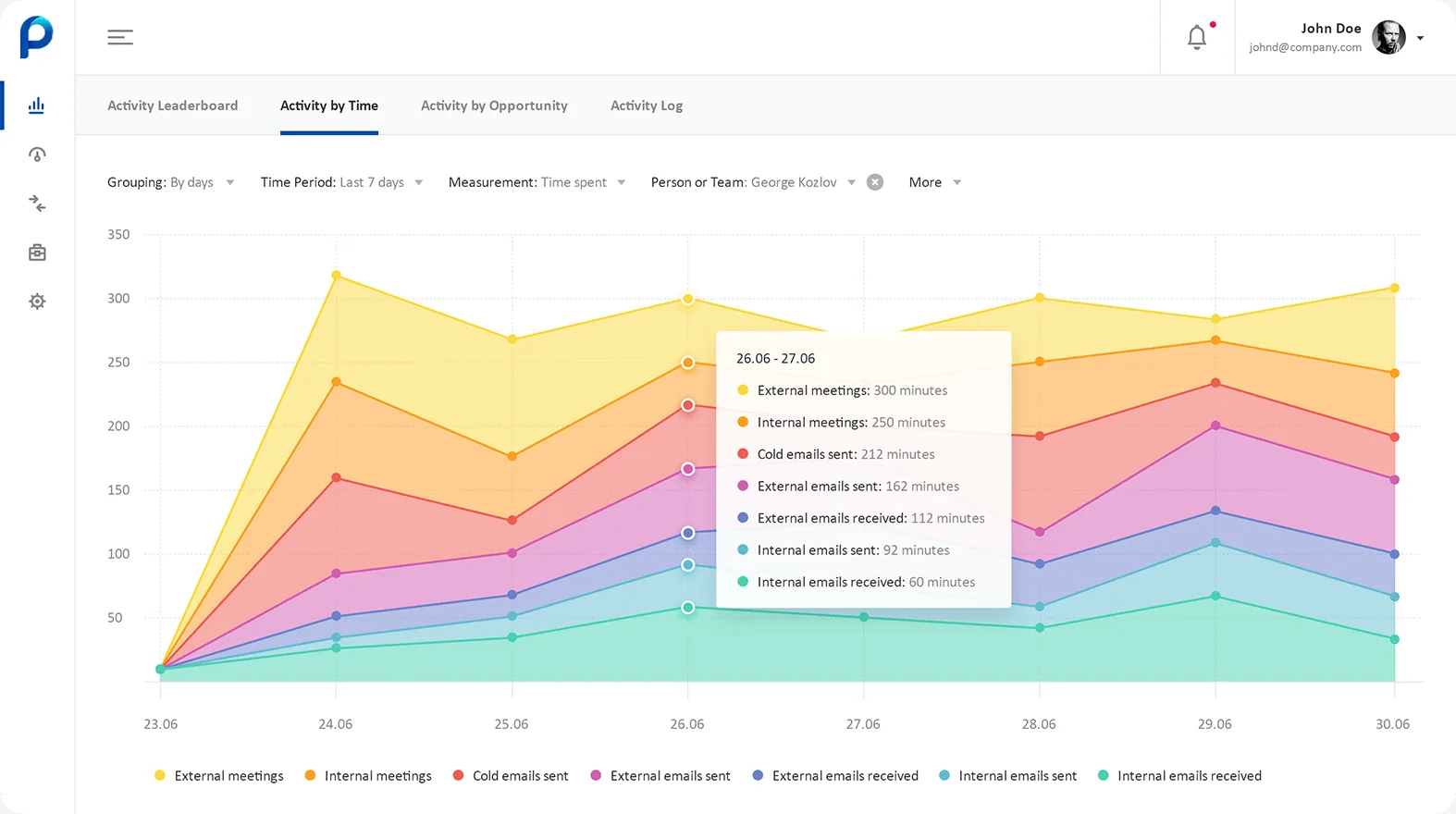
People.ai addresses a basic but expensive problem: customer activity often lives in inboxes and calendars instead of the CRM. Automatic capture can reduce manual entry, create missing contacts, populate opportunity context, and show who is engaged across an account.
Backstory builds on that captured history with account and opportunity views, deal-health signals, prioritization, and question answering. For complex enterprise sales, relationship coverage and stakeholder history can be more valuable than another outbound sequence builder.
Where it falls short
This is an implementation-heavy data layer, not a self-serve prospecting application. It needs email, calendar, CRM, account hierarchy, permissions, and sensitive-data rules configured correctly. The product filters sensitive interactions, but buyers should still review data access, retention, and regional requirements with legal and security teams.
Pricing is not public. Buyers should scope connectors, Salesforce package work, services, rollout, support, and any current Backstory packaging. Poor adoption or inconsistent CRM structure weakens the answers because the platform can only reason over the activity and relationships it captures correctly.
What users report
A verified 2026 G2 reviewer in biotechnology described the core benefit:
“People.ai eliminates the need for manual data entry in Salesforce which is a huge time saver and improves productivity.”
The same reviewer cited inaccurate data interpretation and limited transparency as the main pain points. That makes a pilot's reconciliation test important: compare captured activity, contact mapping, and AI answers with known account history before trusting executive dashboards.
Bottom line
Choose People.ai, now Backstory, when an enterprise revenue team needs dependable activity capture and account intelligence across Salesforce. Choose a prospecting or engagement tool when the primary job is finding contacts and sending outbound messages.
Sources & further reading



Appears in