
Tool
Bardeen
A browser-centered AI automation platform for web scraping, enrichment, lead research, and actions across GTM tools.
TL;DR
- Best for browser-based prospecting, scraping, enrichment, and repetitive GTM work.
- Runs close to the web page, which helps when a useful action is not exposed through a clean API.
- The free allocation is 100 credits; Basic starts at $10 per month.
- Scraping, search, AI, enrichment, and app exports consume credits at different rates.
- Browser automations can break when page structure, sessions, or anti-bot behavior changes.
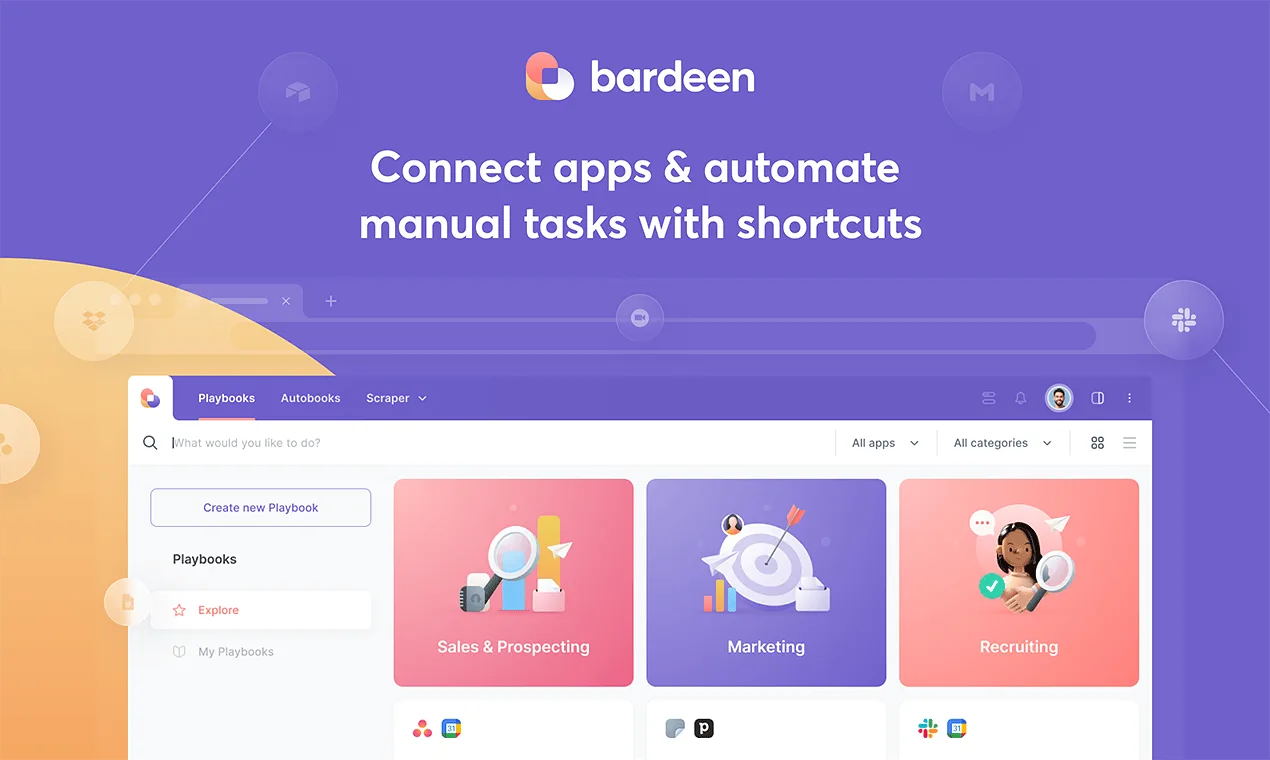
Bardeen is a browser-centered automation platform now focused heavily on go-to-market workflows. It can scrape web pages, search for prospects, enrich records, apply AI transformations, and move results into sales and operations systems. Prebuilt playbooks shorten setup for common tasks, while the Chrome extension keeps the automation close to the page being used.
Decision snapshot
| Question | Answer |
|---|---|
| Primary interface | Chrome extension and web app |
| Best use | Lead research, scraping, enrichment, and browser-based GTM operations |
| Free allowance | 100 credits |
| Starting paid price | $10 per month for Basic |
| Main trade-off | Browser changes and per-row credit use affect reliability and cost |
What Bardeen does well
Bardeen is useful when the source is a web page rather than a structured API. A team can scrape rows, enrich them, use AI to categorize or draft, then export the result to another application. That makes it a practical fit for prospect research and other repetitive tasks that begin in the browser.
The playbook model also gives operators reusable, one-click automations instead of requiring a large back-end workflow for every task. Utilities and imports may be free, while search, scraping, AI, enrichment, and exports carry published credit costs.
Where it falls short
Browser automation inherits the instability of the target site. Layout changes, logged-out sessions, rate limits, captchas, and incomplete page loads can break a flow without any change inside Bardeen. Important jobs need sampling and error checks rather than blind bulk execution.
Credit usage is often per row. A workflow that scrapes, enriches, transforms, and exports the same lead can spend multiple credits on one record. Model a representative batch before treating the entry price as the real monthly cost.
What users report
Product Hunt reviewer Lemuel Connor says Bardeen “really fits into my workflow” for shortcuts across Gmail and Notion. Other reviewers praise time savings but report bugs and frustration around earlier pricing changes. The signal is useful but mixed: lightweight browser tasks can feel effortless, while dependable scale needs maintenance.
Bottom line
Choose Bardeen when the work starts in a browser and centers on GTM data. Choose an API-first orchestrator for back-office systems, or a dedicated data provider when enrichment quality and contractual coverage matter more than workflow convenience.
Sources & further reading



Appears in