
Tool
Roo Code
Roo Code shut down and its repository is archived. Compare migration options, preserved mode controls, provider costs, and the separate Roomote product.
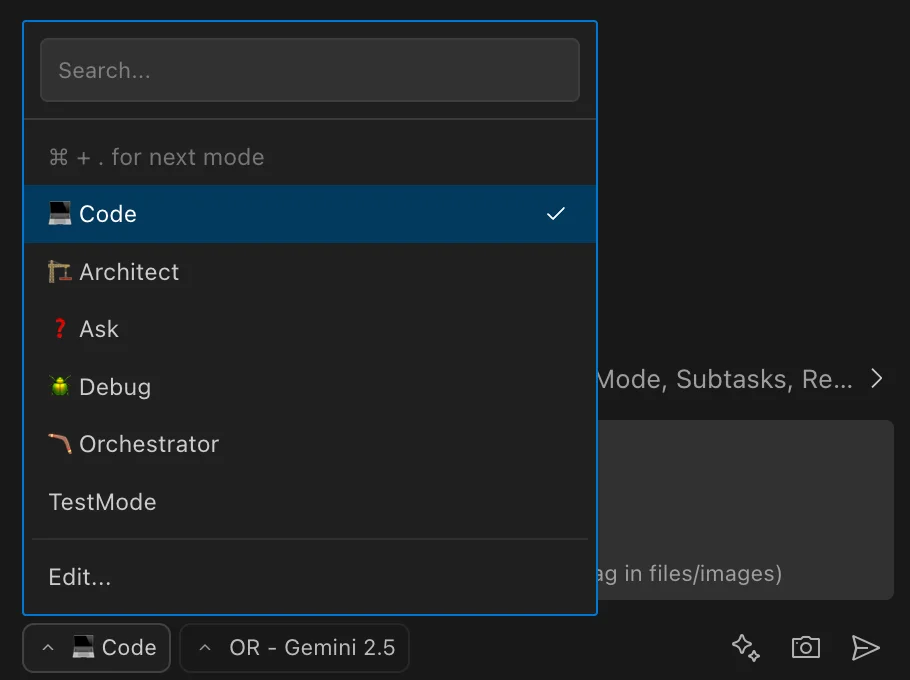
Verdict: migrate a new or support-dependent coding workflow away from Roo Code. The official repository says the extension shut down on May 15, and GitHub records its archive date as May 15, 2026. Existing users can inspect the Apache-2.0 source and preserve their configuration, but should treat continued use as a maintenance responsibility. This is a migration profile, not a recommendation to start a supported Roo subscription.
The old website now redirects to Roomote. That does not make Roomote the same VS Code extension: Roomote describes a self-hosted or hosted cloud teammate built around OpenCode. Decide whether you want to preserve editor interaction or change to delegated cloud work before following the redirect.
What decision are you making?
| Requirement | Practical choice | What to verify |
|---|---|---|
| Supported agent inside an editor | Evaluate a maintained alternative such as Cline | Provider compatibility, approvals and the exact editor license |
| Existing custom modes with valuable project instructions | Export and map the workflow before migrating | Role prompts, permitted tools, model assignments and project rules |
| Continue running a pinned local installation | Retain only with an identified maintainer | Extension provenance, dependencies, model API compatibility and recovery |
| Modify the implementation | Assess an Apache-2.0 fork | Active maintenance, security response and release process; a fork name alone proves none of these |
| Delegate work to a remote environment | Evaluate cloud agents as a separate category | Sandbox, credentials, inference spend, repository access and review gates |
| Resolve an old paid account | Use the billing contact in the official README | Do not assume old credits or subscriptions transfer to a different product |
The AI coding-agent hub compares current execution surfaces. Cline is the editor-oriented alternative named by Roo’s own README; OpenCode is relevant when moving to a terminal or evaluating the harness used by Roomote.
Controls worth preserving
Roo’s retained documentation describes Code, Architect, Ask, Debug and Orchestrator modes, plus custom modes. Modes change tool access and task behavior; per-mode model selection can preserve a planning-versus-implementation workflow. The gallery shows that selector as historical product evidence, not a working-session test.
The approval interface separately controls reads, writes, commands, browser activity, MCP and subtask actions. Its master switch can pause auto-approval while preserving selections. For migration, record which capabilities were allowed rather than copying a broad “approve everything” setting. A destination agent may interpret similar labels differently.
Start with one small repository task. Ask the replacement to inspect and propose a plan, review the file and command permissions, then compare the resulting diff and test evidence. Use the unfamiliar-codebase workflow to check whether required context survived migration without immediately granting write access.
Pricing and availability
The archived code has no source-license charge under Apache-2.0. That is the meaning of the $0 figure here. It is not a free hosted service, a model allowance, or an ongoing support offer. Provider inference, local hardware and maintenance remain separate costs; no current Roo request quota or paid tier is presented as purchasable.
Roomote has different economics and licensing. Its current homepage states that self-hosting is free for up to ten users, while Cloud offers a seven-day trial and requires your own inference key. It uses the Fair Core License with an Apache-2.0 future license, including restrictions on competing commercial services and bypassing license-protected capacity. Do not transfer Roo’s Apache licensing or historical prices to Roomote. Check the new service’s current plan and contract if changing operating models.
Data and operational limits
The archived privacy notice says relevant code, prompts and context go to the selected model provider, with API keys stored locally and sent to that provider. It also describes default-on PostHog usage/error telemetry with an opt-out. This is retained policy evidence, not a post-shutdown audit of service endpoints or every installed version.
Before retaining an installation, inspect its provider route, telemetry setting and MCP integrations. A local editor does not establish local-only inference. A working old model connection also does not establish future compatibility. Keep credentials narrow, pin the package you evaluate and independently review changes before merging.
Community perspective
In the Hacker News shutdown discussion, KronisLV valued Roo’s multiple agent modes compared with a simple plan/act split. minimaxir questioned how a commercial fork could differentiate from an actively maintained upstream and whether cloud agents would be easier to differentiate. These are attributed opinions about workflow and sustainability, not comparative accuracy or reliability measurements.
We did not run a coding benchmark or verify a retained installation end to end. The decision follows current upstream status: preserve useful instructions and controls, then choose a maintained execution surface. Continue’s lifecycle profile covers a related maintenance decision for a different retired assistant.


