Comparison
Regie.ai vs Lavender (2026)
Compare RegieGO prospecting with Lavender Email Coach and Ora: workflow ownership, integrations, current pricing, credit limits, and rollout checks.
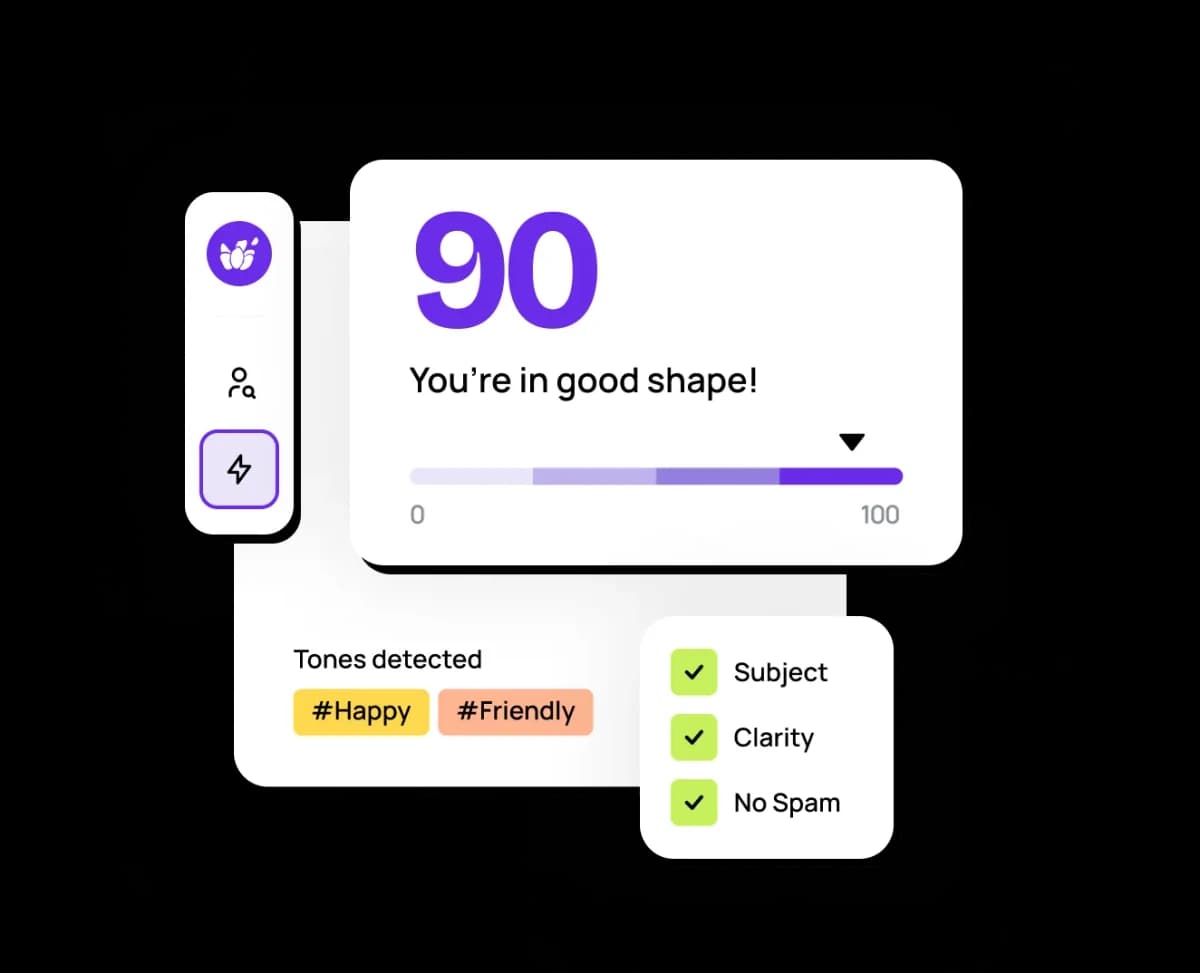
Verdict: Choose Regie.ai's RegieGO when you need to research prospects, enrich contacts, coordinate outreach, and dial from one workspace. Choose Lavender Email Coach when your prospecting stack already works and the bottleneck is the email a rep writes before pressing send. If you want Lavender to research and send autonomously, evaluate its separate Ora product; an Email Coach subscription is not that purchase.
The buying question is how much work you want the software to own. This comparison uses public product documentation and pricing checked October 7, 2026, plus attributed user reports. We did not run campaigns, measure reply rates, or test deliverability.
Decide who owns the outbound work
| Decision | RegieGO | Lavender Email Coach | Lavender Ora |
|---|---|---|---|
| Starting problem | Research, contact data, and outreach execution are fragmented | Reps need feedback on drafts inside their existing workflow | A supplied lead list needs automated email research and execution |
| Main surface | Prospecting workspace with agents | Inbox or supported engagement-tool extension | Agent and campaign setup |
| What the seller owns | Targeting, data connections, play configuration, and review | Recipient choice, factual claims, final edits, and sending | List selection, training material, instructions, and campaign oversight |
| Contact and account context | Enrichment, signals, and connected CRM/call context | Recipient context and draft personalization suggestions | CSV or Salesforce inputs plus prospect, company, and market research |
| Calling | Power dialer available on paid plans | Not the job of the Coach | Public Ora offer is email-focused; do not budget it as a dialer |
| What to evaluate | Accepted contacts and useful work per credit | Correction time and relevance of coaching | Research accuracy, send controls, and handling of replies |
RegieGO is the broader operational choice. Lavender Coach is the smaller intervention when you want to keep the current sequencing process. Ora makes the brands overlap more than older “generator versus coach” comparisons suggest, but it still needs a separate capacity and permissions review.
RegieGO: inspect the handoffs, not just the generated copy
RegieGO's integration documentation describes sending through your own Gmail or Outlook account, one connected CRM per workspace, and an optional write-back setting. Supported CRM connections include HubSpot, Salesforce, and Monday CRM. Gong and Attention can supply call transcripts; Seismic can supply approved content.
That combination matters when a useful message depends on several sources. A rep can use an account event, a previous conversation, and a relevant case study without copying everything between separate tools. It also creates more failure points: wrong account matching, outdated facts, conflicting CRM ownership, or a write-back that changes the wrong record.
During evaluation, include one existing customer, one suppressed contact, and one account with ambiguous ownership. Check whether the proposed action respects each condition. Do not enable automatic execution merely because a generated draft sounds plausible. Use the controlled prospecting workflow to define acceptance and stop rules.
Lavender: distinguish draft coaching from Ora automation
Coach works where a seller is already composing. It offers scoring, editing, personalization, and mobile-readability guidance. Its paid integration tiers matter if the seller lives in an engagement platform rather than Gmail or Outlook. A useful pilot asks whether a rep understands and accepts the suggested correction; chasing a high score alone is not a business outcome.
Ora is a different workflow. Lavender describes importing leads through CSV or Salesforce, training the agent with inbox context and other resources, and giving it campaign instructions. Ora then researches, writes, and sends. Before buying, demonstrate a pause, a rejected draft, a corrected source fact, and the route for a human to take over a reply. The public overview does not establish every approval control or integration limit.
Current pricing and limits
Prices below are public USD list prices checked October 7. Compare equivalent workloads rather than dividing unlike credits, emails, and seats into a single “cost per lead.”
| Product | Monthly billing | Annual billing / limits |
|---|---|---|
| RegieGO Free | $0 | 250 non-expiring, one-time credits per person; up to 10 people share the pool |
| RegieGO Pro | $49 for one person | $41/month equivalent; 60,000 credits upfront versus 5,000/month |
| RegieGO Team | $150/seat, minimum 2 | $125/seat/month equivalent; 180,000 credits per seat annually versus 15,000/month, pooled |
| Lavender Coach Free | $0 | 5 analyses and 5 personalizations/month |
| Coach Starter | $29 | $27/month equivalent, billed annually |
| Coach Individual Pro | $49 | $45/month equivalent, billed annually; adds integrations |
| Coach Team | $99/seat | $89/seat/month equivalent, billed annually; coaching dashboard |
| Ora | $500/agent/month at launch | 1,000 emails/month and 4,000+ contacts/year advertised; no annual commitment |
RegieGO meters research, drafting, enrichment, and dialing; failed enrichment costs no credits. Paid credits do not roll over. At exhaustion, metered work pauses unless a paid workspace has enabled capped overage billing. Separate credit packs are unavailable. Enterprise is quote-based. Annual cancellation stops renewal, not the prepaid term.
Coach offers a seven-day trial with all integrations and no card. Starter covers Gmail/Outlook use; verify the paid integration entitlement after the trial. Its unlimited email and personalization allowance should not be confused with unlimited Ora sending. Ora can be built free, but launching incurs the separate agent charge.
Review mailbox and CRM access by product
Lavender's privacy summary says Coach normally accesses the draft being edited, deletes it after analysis, and can receive additional permission for historical-email analysis. Ora's own page describes learning from the inbox. Do not apply the Coach default to an Ora deployment without reviewing its actual consent and contract.
Regie's policy covers connected mailbox and CRM data, prompts, contacts, and call recordings/transcripts. It describes processing through service providers and retention for as long as needed for the stated purposes. That is not a blanket zero-retention promise. Evaluate data access alongside the workflow scope you actually intend to enable.
What users report, and what that evidence cannot settle
On G2, Jody N., dated April 17, 2026, described Regie as fitting their existing sales workflow and helping start drafts. G2 labels the review both seller-invited and incentivized. It is an individual experience with the product at that time, not proof of current RegieGO economics or autonomous reliability.
In a September 2024 Reddit discussion, eg9312 reported that their Lavender-style sequence test did not improve opens or replies and produced no meetings. They also described weak training and an unclear sales-development plan. Sample size and controls were not supplied, so this cannot establish that Lavender fails generally. It does illustrate why copy feedback should be evaluated separately from targeting and the sales process.
For your own pilot, keep the audience and offer comparable, record factual corrections and seller review time, then inspect qualified replies. Start with Coach if the problem is draft quality; evaluate RegieGO if the problem spans prospecting operations; evaluate Ora if you already have leads and want an email agent. Use the sales-stack guide for the wider purchase and the email-personalization guide for evidence checks before sending.
Sources & further reading


Ordered for comparison, not as a universal ranking. Inclusion requires a direct fit with this page's stated workflow.